


What Your Body Needs at Different Phases of Your Ride
What kind of nutrition and hydration does your body need when you’re out cycling? This is a question that all of us have and today our nutritionist, Kelli is here to provide her answer.
We received a question from Amy that came in as part of our “Ask the Sports Nutritionist” assistance, but the answer was just so detailed and necessary for all of us cyclists, that we’re making it into a full out post.
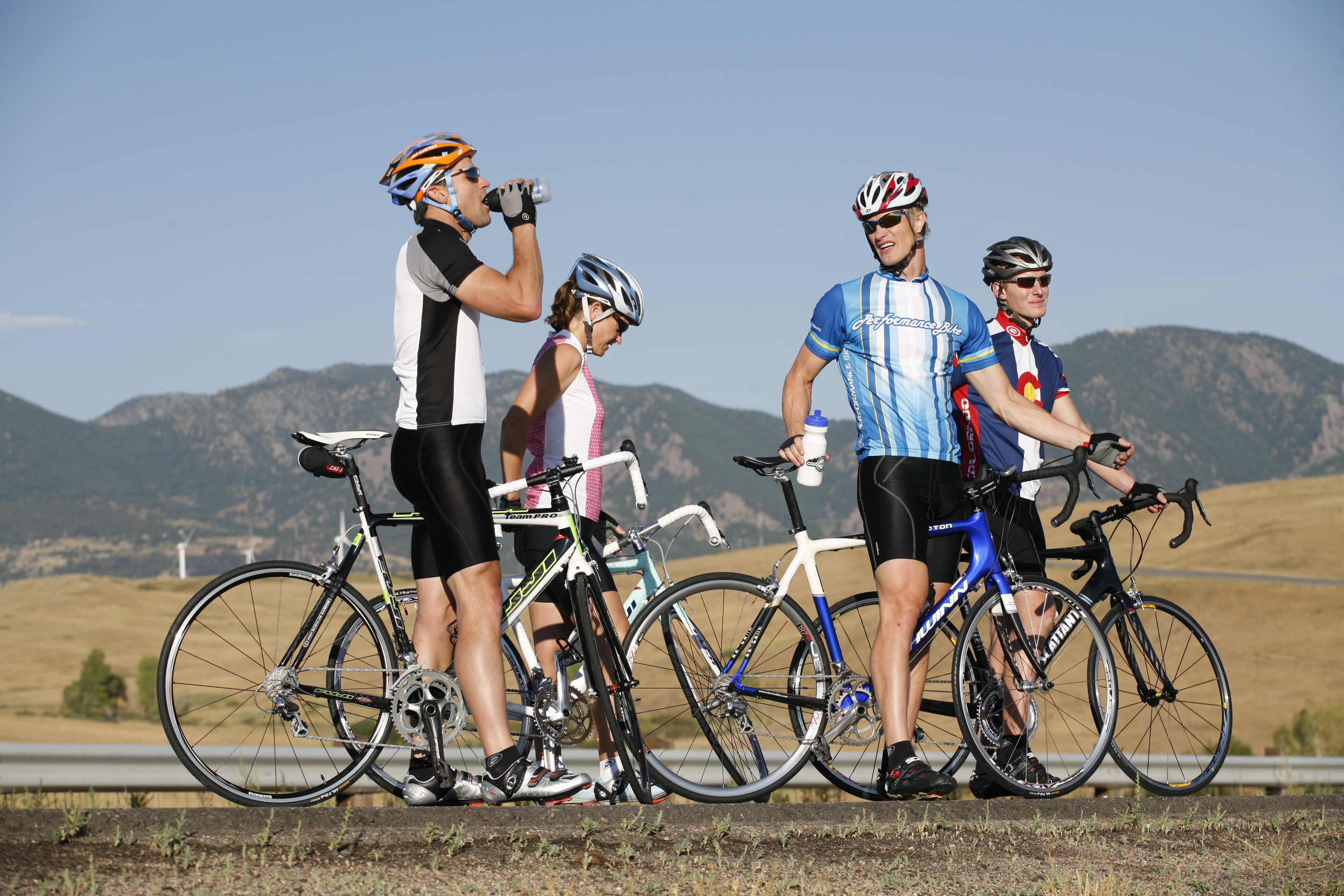
Here’s Amy’s question:
“I’m hoping you can give me a bit of advice! I have just recently got into mountain biking, and have a quite a few sportives coming up, so I am putting in a lot of miles for training. I also just like to hit the trails for fun.
I am very confused about nutrition and what I should be taking during long, intense training and of course during the sportives themselves. Currently I am using High 5 tablets in my water to help with hydration; shot bloks during exercise (and the occasional Power Bar); but I don’t know what I should be taking for recovery? Also is there anything else I should be taking during exercise? Or any bars that you would recommend?
I’m really not too sure what are the essential things that my body needs at different phases of the exercise. A lot of my friends say it’s down to personal preference what products to choose, but I don’t even know what to begin looking for!”
And the response from Kelli:
Hi Amy,
Thanks for the question! I can be long-winded, so I hope this helps you without bogging your down in too many details! Here goes:
There are 3 main things to be concerned about during the ride (any ride that’s moderate to high intensity and >90 minutes):
1) Fluids: Aim for 16-24 oz. per hour (up to 32 oz. in summer heat). Or for an individualized fluid goal, weigh yourself immediately before and after training to estimate fluid losses (take into consideration the amount of fluid consumed during the ride). My preference is to use a sports drink (or my homebrew that can be found at www.apexnutritionllc.com/freetools.html) that provides fluid, carbs, and lytes. If you’re an athlete that prefers to drink water, at least some of the time, you’ll have to add more carbs and lytes through foods and supplements as described below.
 2) Carbs: Your body can use 60+ grams of carbs per hour (depending on the sources of carbs). Again, I like to use a fluid that provides some of these carbohydrates (the High 5 Energy Drink or Endurance Drink are great for this!). If drinking 20 oz. per hour of a fluid that contains ~12-15 grams carbs per 8 oz., you’ll get ~30 grams per hour just from the fluids. Then, to get the rest of the carbs you need, add 1 small carb option such as 1 gel, 3 Shot Bloks, ½ most sports bars (or a Clif Bar Mini), 1 Honey Stinger Waffle, etc (look for ~20-30 grams carbs on the label) each hour.
3) Electrolytes: Most athletes need 400-700 mg sodium, 100-300 mg potassium, 80-120 mg calcium, and 40-60 mg magnesium PER HOUR of training. Usually, you can get some of the sodium and potassium in your sports drink and in your foods. So, begin by calculating the amount you’ll get per hour based on your fliud and food plan. Then, make up the difference with supplements such as Endurolytes, SCaps!, or another supplement. You’ll find a breakdown of many commercial electrolyte options at https://lovingthebike.com/nutrition-tips/6839 .
In summary, each hour of riding:
- Drink 16-24 oz. sports drink
- Eat 1 carb option (20-30 grams carbs)
- Add lytes with supplements as needed
If riding >5 hours: Stick with the same nutrient goals as above. Then, every 3rd hour, you can add a small portion of “real food” if you’d like. A half peanut butter and jelly sandwich, ½ rice burrito, ½ deli meat sandwich, ½ Snickers bar, etc. – these foods are used to add some fat, protein, and extra calories for long rides. They can also serve to add a salty food option to what often becomes an overload in sweet-tasting sports foods and drinks. What’s more, if you choose foods you’ll look forward to, they are a big morale booster!
Schedule: I’m a big believer in eating/drinking to a schedule rather than to thirst/hunger when riding – in fact, if I’m hungry or thirsty on a long ride, I know I’m in trouble. There’s too many variables and things to distract me to let anything other than my plan and schedule determine my fuel intake. So, determine what you need per hour based on the information above, pack it, and drink/eat it!
Recovery: Your recovery snack needs to contain 30-60 grams carbohydrates, 10-30 grams protein, and fluid. I also strongly recommend adding Medium Chain Triglycerides, from organic extra-virgin coconut oil, as they are an efficient energy source that’s used directly by the mitochondria (energy powerhouses) of the cells. As a bonus, antioxidants and probiotics are helpful in recovery – the probiotics increase the absorption of the antioxidants which fight the extra free radicals created by exercise. For a recipe, try: our Almond Butter Smoothie and use plain yogurt in place of milk. In my opinion, it’s a perfect recovery. Or, use a bar or another snack that meets these criteria. Try to consume your recovery snack within 30 minutes of finishing your ride.
I hope this helps! But, if you need more individual help and a specific plan, I can always be hired for custom nutrition packages and coaching. For more information on specific plans and coaching, visit Apex Nutrition.
Photo c/0 Performance Bike


What I use in cooler temperatures is different than what I use when it’s hot and humid. I used Heed for a drink on a hundred miler when it was close to 90 and found that the electrolytes were nowhere close to what I needed. I bonked at mile 50. I started using EFS when it’s hot and have not had a problem since. Compare the electrolytes in EFS which is 90% higher than Heed and I found out why I bonked so bad on Heed.
Hi Steve, Thanks for your comment. Yes, unfortunately Heed is far, far too low in electrolytes for training in heat and humidity, in fact, too low for most any training in my opinion. This is exactly why I use the 3rd step to go back and check electrolyte amounts. So, for those who want to use Heed, it’s important to make sure to supplement extra lytes through pills, fuel that’s higher in sodium, etc. For my money, I go with a drink that contains a good amount so I don’t start in a hole. For long distance in the heat, the other lytes (potassium, cal, mag) become more important as well. And really, I think any high-intensity training >90 minutes deserves 400 mg sodium per for optimal performance if in Spring through Fall…doesn’t have to be extreme temps. Have a great day!
OMG, what an overkill joke. Not once in the answer is “fruit” or “vegetable” used. Plenty of high sugar answers and heavily processed / refined options, in fact even the statement to “add a salty food option to what often becomes an overload in sweet-tasting sports foods and drinks” is like trying to deal with complexity by adding more complexity.
I am a type 1 diabetic who blends thousands of miles each year of cycling into my lifestyle. I ride 12 months a year outdoors in Minnesota. One thing I know from long term blood glucose levels and other tests: This advice is a joke.
K.I.S. and just make a list of your favorites from an incredible array at every grocery store:
whole grain bagels. kiwi, apple, blueberries, raspberries, carrots, etc.
The one piece of good advice was plain yogurt.
Balance, simple. whole grains, fruits, and vegetables. They can all either be consumed before, carried with or eaten after. Small portions and steady. Don’t run out, don’t over indulge.
The same concept for driving a car applies here. Keep it clean, maintained, don’t beat it up. You don’t need a bunch of additives, just common sense upkeep, maintenance, and sensible driving.
Other than that? OMG! Pay for advice that talks about power bars, snickers, sugary drinks, etc.?
When did common sense leave the room?
Good luck with that.
Hi CM,
Thanks for the comment. However, I think we may be talking about 2 different things. This article was specifically for “Training Nutrition,” especially during heavy training and competitions..and not Daily Nutrition. Your suggestions for whole-food fruits and vegetables are not appropriate for a competitive athlete, while on the bike. For example, I’ve never recommended that an athlete carry and eat a carrot while competing. Why? 1) There’s only 5-8 grams carbs in a carrot, and this will not go far to meet the athlete’s 40-60+ grams carbs/hour needs while competing. 2) The fiber in the carrot can delay the digestion of the nutrients, and the carrot may well still be setting the stomach long after the competition in done. This means no fuel in the bloodstream during the competition. 3) Fiber is a high-risk for stomach cramps and issues while pedaling hard. Same thing for whole friuts – while they have more to offer in terms of carbs, they are not an efficient low-risk source for most athletes while training hard or competing. On the other hand, these foods are great for DAILY NUTRITION. In the case, I absolutely recommend whole-food high nutrient, non-processed foods that promote steady blood sugars and energy, and promote overall health and wellness (please see my article “Daily Nutrition vs. Training Nutrition”). On the bike, your body deals with and processes the carbs differently than when you’re not pedaling.
As far as the salty food recommendation – yes, when you’re competing/training at a high level for hours, you can get sick of the taste of carbs. Plus, your body needs sodium (promotes electrolyte balance, glucose uptake, fluid uptake).
Lastly, I’ve worked with many clients with Type 1 Diabetes and we work together to form a plan for both health and athletic goals. This usually includes initially testing before, during, after training, and before and after every meal of the day (until we know we can trust the plan). On an individual basis, I’ve seen that these competitive athlete’s bodies use the refined carbs well during the ride, without spiking blood sugars. And, then, of course, for daily nutrition we use much higher fiber, non-refined, portion-controlled carbs with more of an emphasis on non-starchy vegetables, healthy fats and proteins. I would encourage any athlete with Type 1 Diabetes to study the subject thoroughly and get help from a Sports Nutritionist Dietitian, if needed.
I hope this serves to clarify. Thanks again. Kelli, RD
Nice article. I know I’m always looking for new ideas as I’ve got a bad gall bladder fats are a problem for me. I ended up a vegitarian out of health (although my conscious had no objections either) so I thank god I don’t have wheat allergies!
Great info.